Research
Research Items
Assembled Identities, Phase 1

How can homes built in large numbers still carry personal and cultural identity?
Proposal for the UAE National Pavilion, Venice Architecture Biennale 2027
Read The ProposalPermutable Assembly, Phase 2
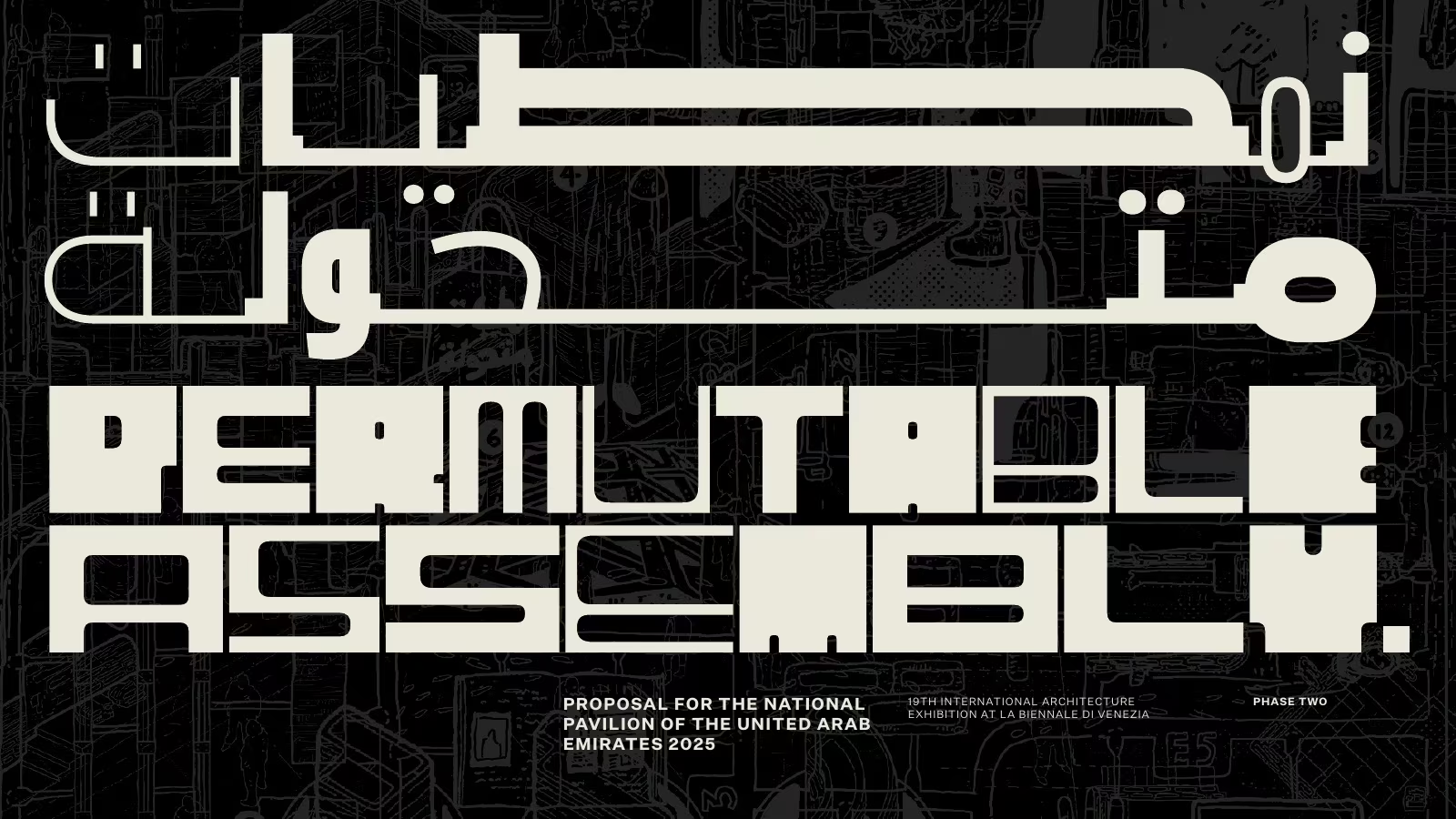
Prefabricated concrete modules meet large-scale 3D printing, so each home can be tailored to its owners.
Proposal for the UAE National Pavilion, 19th International Architecture Exhibition, Venice 2025
Read The ProposalPermutable Assembly, Phase 1
![Cover of Permutable Assembly Phase 1]()
It starts from a generation that may never own a home, and proposes a modular typology for accessible housing in the UAE.
The first phase, submitted to the UAE National Pavilion in 2023
Read The ProposalAdditive Dialogues
![Frames from the Additive Dialogues interview series]()
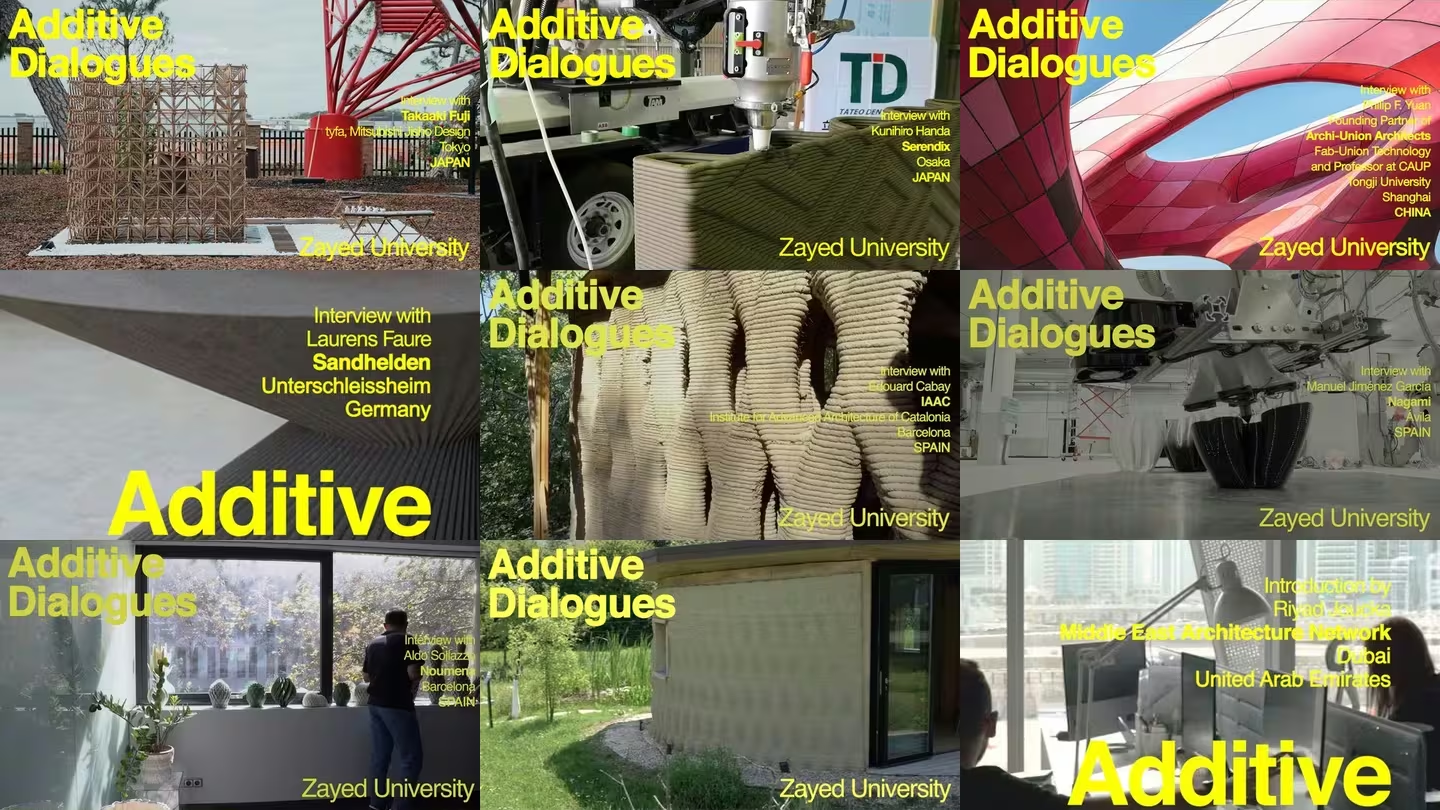
Riyad Joucka talks with 3D printing and design practices, from WASP in Italy to Serendix in Japan, about printing, modular building and the majlis.
With Prof. Adina Hempel, part of Riyad Joucka’s Zayed University fellowship
Watch On YouTubeLive Academy
![The Live Academy home page, a black 3D-printed form behind its headline]()
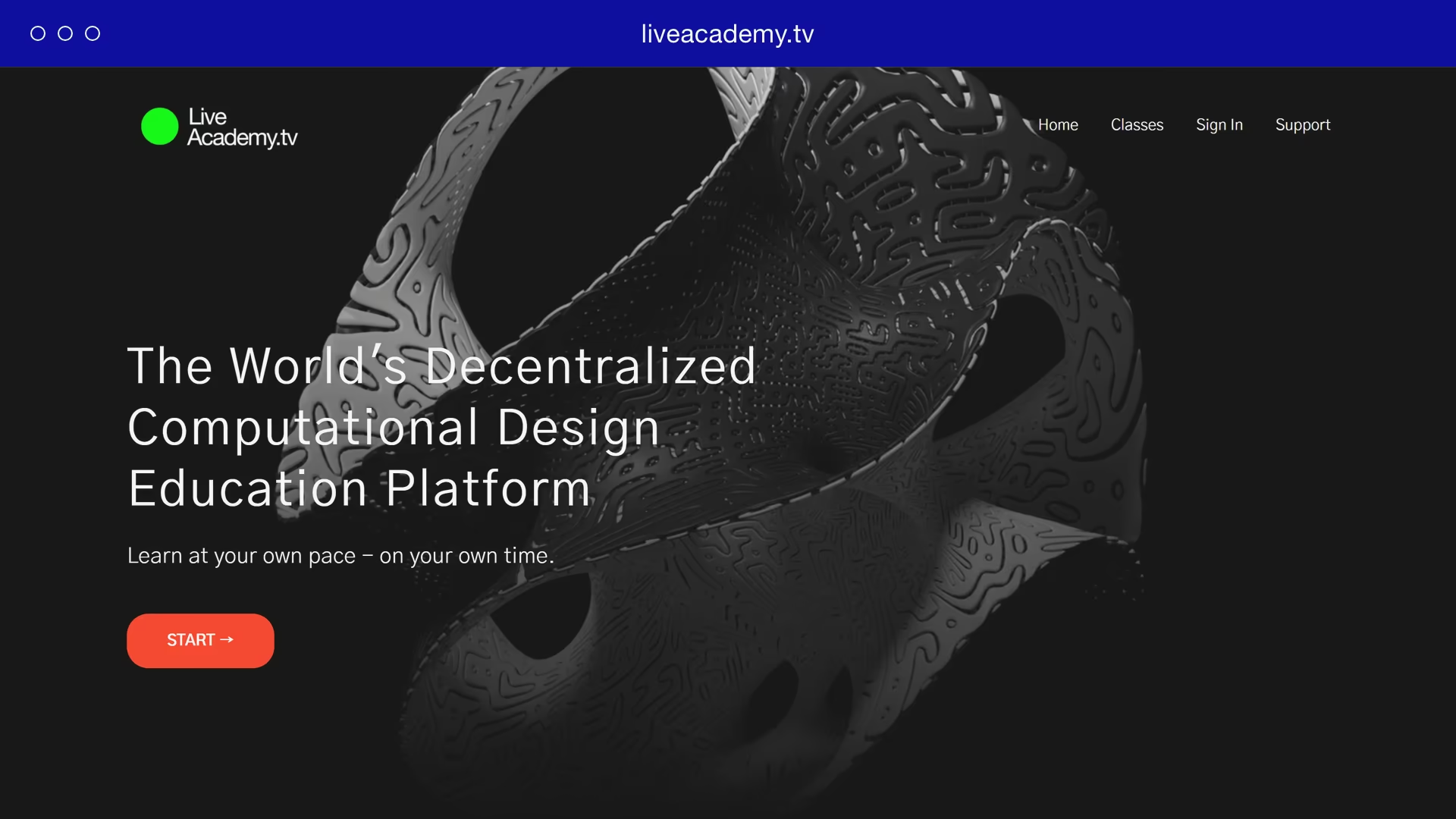
Online classes in digital design, built by MEAL*. Practitioners teach software such as Grasshopper and Blender, and students learn at their own pace.
An online platform by MEAL*
Visit Live Academy
Architectural Intelligence
We treat the building traditions of the Gulf as working systems. The majlis, a room for hospitality and conversation, and the barjeel, or wind tower, organize social life and climate together. Our research takes such traditions as systems to work with, never as images to copy.
We ask how these systems can be carried into computational design and digital fabrication. One device recurs in the work: a kit of parts governed by rules. As Riyad Joucka says in his TED talk, “modularity doesn’t have to mean sameness. It can mean variation, intention and agency.” The four interests below hold that idea at different levels of evidence, from full-scale tests to proposals.
Research Interests
Housing, Modularity And Identity
We start from a premise that Riyad Joucka argues in his TED talk: developers design homes for a market, before the occupants are known. We ask what identity tens of thousands of new homes in the UAE will carry, and whether a kit of parts can give variety that answers to place and family. The work so far is a housing system for Dubai and four submissions for the UAE National Pavilion in Venice. None has been built.
- Assembled Identities, Phase 1
Proposal For The UAE National Pavilion, Venice 2027
Treats the majlis, the barjeel and other vernacular elements as fragments. A proposed configurator would test each assembly against rules for daylight, circulation, adaptability and ecological footprint.
- Assembled Identities, Phase 2
Proposal For The UAE National Pavilion, Venice 2027
States that it “does not propose a housing model or technological solution”. It is a curatorial method: visitors assemble a limited kit under explicit rules, and every configuration is archived.
- Permutable Assembly, Phase 2
Proposal For The UAE National Pavilion, Venice 2025
Asks how modularity can respond to “context, climate and culture”, combining prefabricated concrete modules with large-scale 3D printing in a developer’s showroom.
- TED, Dubai, 2025
Talk, 2025
“Reimagining Traditional Architecture For Modern Needs”. Riyad Joucka describes a platform where residents enter their needs, context and climate, and homes are assembled from prefabricated modules.
- Meta-Modular
Design Proposal, 2023
A housing system proposed for the Mohammed Bin Rashid Housing Establishment: a courtyard house on a modular grid, made to grow as the family changes.
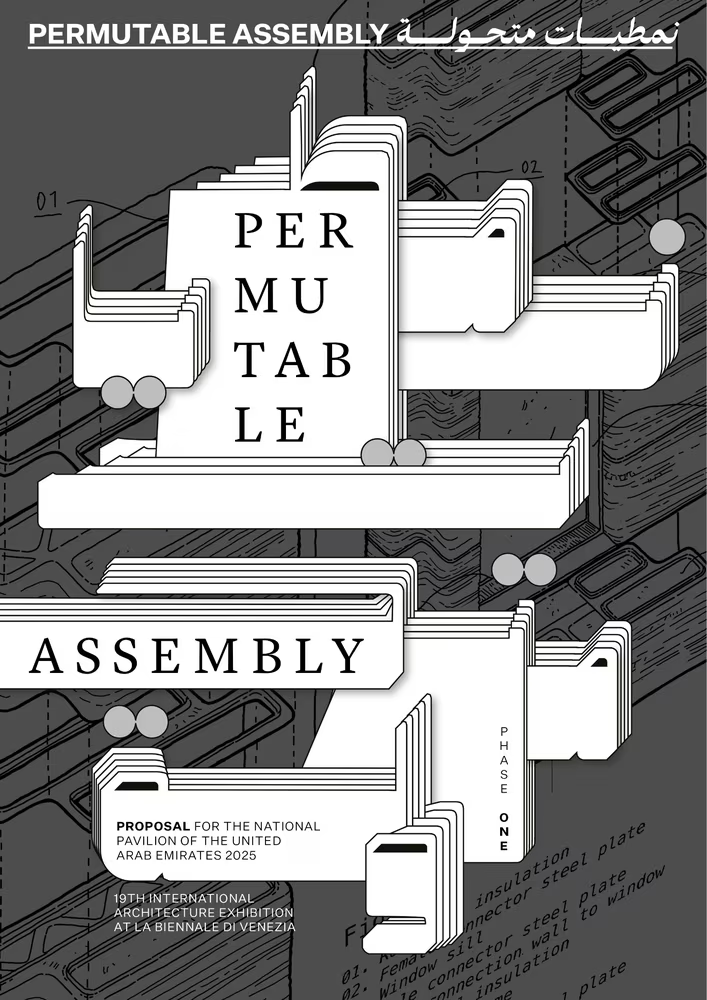
- Permutable Assembly, Phase 1
Proposal Submitted To The UAE National Pavilion, 2023
Starts from falling home ownership among millennials in the UAE and proposes a kit of parts, with vernacular case studies, field interviews and full-scale prototypes.
The Majlis As A Living Typology
The majlis is the Gulf’s room for gathering and conversation. The Adaptive Majlis, a research project by Riyad Joucka and Professor Adina Hempel under a fellowship in practice at Zayed University, asks how the majlis can be reimagined through modular design, 3D printing and regional materials. Its work in progress is the Reef Pavilion, a proposed majlis of 3D printed ceramic.
- Adaptive Majlis
Ongoing Research
The study concerns the community majlis, a room open to newcomers and to young and old. Its planned outputs are peer-reviewed papers and exhibitions.
- Reef Pavilion
Ongoing Research
A proposed majlis of 3D printed ceramic panels on a steel frame. Sections were printed and assembled at full scale in Barcelona in August 2026. The pavilion itself is not yet built.
- 3D Printed Majlis
Design Proposal, 2020
Three options for a majlis annex in Abu Dhabi, designed for concrete 3D printing and taken to schematic design.
Fabrication Research In Built Work
This is the research that has been built: completed installations, prototypes and objects, none of them a building. Each put a fabrication method to work at full scale, from robotic 3D printing in concrete and recycled plastic to robotic stone milling and parts prefabricated off site. We have not yet published findings from these projects, so the entries record what was made, by which method and with whom.
- Le Monde d’Hermès Kiosk
Built, 2022
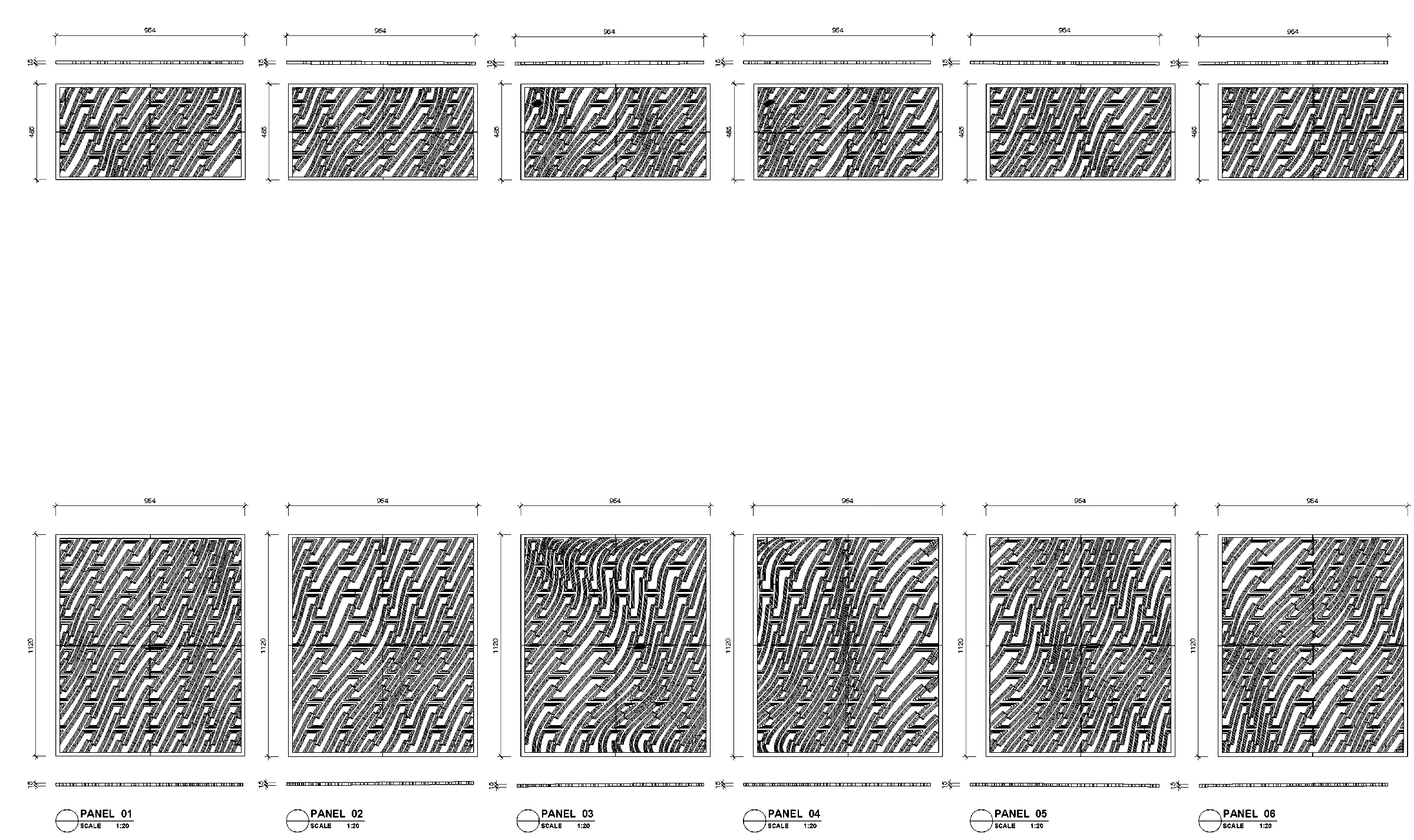
A pop-up kiosk in Dubai Design District with wall panels robotically printed from recycled plastic. Built by Alpha Nero.
- Modulus
Built Prototype, 2021
A kit of three seating types for public space, printed in concrete by Concreative for Dubai Design District.
- LATE
Built, 2021
A 3D printed floor lamp, fabricated by Nagami.
- Mawj
Built, 2020
A 3D printed chair, fabricated by Nagami.
- Deciduous
Built, 2019
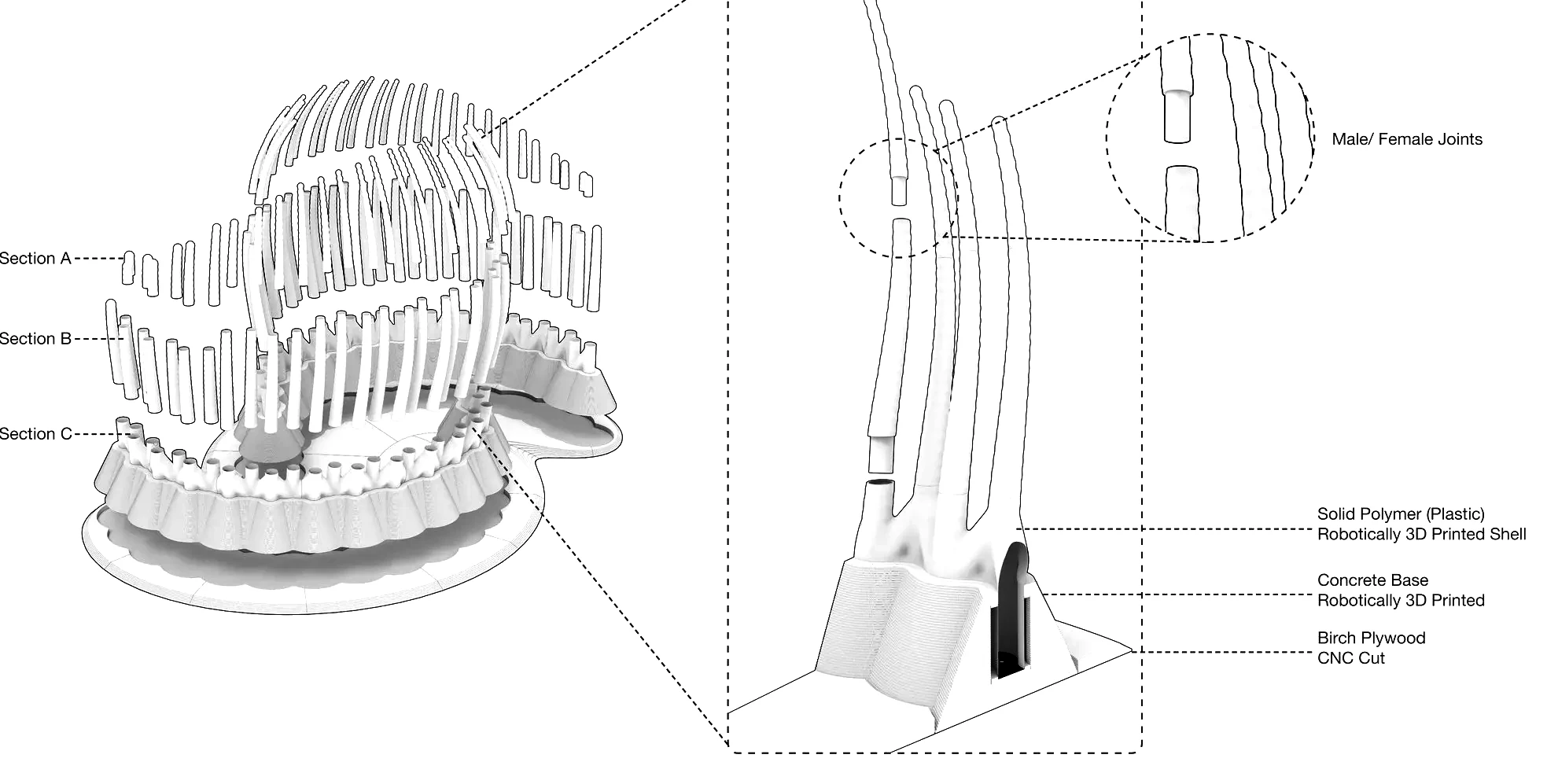
A pavilion in Dubai, described in its project text as “a first attempt to combine robotic 3D printing in plastic and concrete”. Its stems were printed from 30,000 recycled PET bottles. Made with besix3D, Ai Build, 3D-Vinci, Reflow and Sika.
- Tutuncka 2.0
Built Prototype, 2019
A 3D printed lamp whose form comes from an algorithm that generates variations.
- ARID
Built, 2017
Jordanian stone milled by robot from a fracture simulation, with cut steel, for Amman Design Week 2017.
Teaching And Exchange
MEAL*, the Middle East Architecture Lab, is the research arm of MEAN*. It develops workshops and academic programs on design technologies, among them editions of the AA Visiting School in Dubai. Riyad Joucka directed that school from 2014 to 2018. The fellowship’s interviews are published as Additive Dialogues, and Live Academy carries the teaching online.
- Additive Dialogues
Interview Series
Conversations with practices in large-format 3D printing, among them WASP, Nagami, IAAC and Serendix, about printing, modular building and the majlis.
- Live Academy
Online Platform
MEAL*’s online platform for computational design education, with classes that practitioners can follow at their own pace.
Method
Our research proceeds by designing and making. A question is studied through reading and precedents, through conversations with the people who build, published as Additive Dialogues, and through drawings, digital models and physical prototypes that answer one another.
The entries above say what was built, what was tested and what is still a proposal. The housing work has reached the proposal stage only.
References And Outputs
Joucka, R. (2025). Reimagining Traditional Architecture For Modern Needs. TED, Dubai, 2025.
Permutable Assembly, Phase 1 (2023) and Phase 2 (for the 19th International Architecture Exhibition, Venice 2025). Proposals to the UAE National Pavilion. Curator Riyad Joucka, co-curators Adina Hempel and Adham Selim.
Assembled Identities, Phase 1 (2025) and Phase 2 (2026). Proposals to the UAE National Pavilion for the 20th International Architecture Exhibition, Venice 2027. Curator Riyad Joucka, publication co-editors Adina Hempel and Basem Mohamed.
Additive Dialogues. Interview series by Riyad Joucka with Professor Adina Hempel.
The Adaptive Majlis research is carried out under the Adaptive Majlis Fellowship in Practice at Zayed University. Riyad Joucka is Principal Investigator and Adina Hempel is Co-Principal Investigator.
Collaborate On Research
If you are a researcher, an institution or a fabricator working on housing, the majlis, ceramic printing or prefabrication, we would like to hear from you. Tell us what you are studying and we can discuss a collaboration.
Discuss A ProjectOr write to info@m-e-a-n.design.
The practice and its team: Studio.